Newsroom
What Does It Really Cost to Feed a Young Child Well?

A new Nationally Costed Nutrition Basket for Early Childhood Development (ECD) centres aims to put a real price on the food young children need to thrive.
What does it actually cost to provide nutritious food to young children while they are attending an early childhood development centre?
It is a straightforward question, but one that has not always been easy to answer. National nutrition guidance explains what children need, but ECD centres also need to know which foods to buy, in what quantities, and how much they will cost.
A new collaborative initiative is working to bridge that gap.
Zero2Five Trust, the Pietermaritzburg Economic Justice and Dignity Group (PMBEJD) and registered dietitian and public health nutrition consultant Philippa Barnard have developed the Early Childhood Development Nationally Costed Nutrition Basket. The basket translates existing nutrition guidance into a practical food requirement that can be planned, purchased, prepared, costed and monitored over time.
From nutrition guidance to a practical food basket
The work grew out of Zero2Five Trust’s practical experience of providing nutrition support and training to ECD centres.
An initial two-week menu, based on National Department of Health nutrition guidance, was refined through implementation experience into a practical one-week menu. This was then developed into a Minimum Adequate ECD Nutrition Framework and, ultimately, a defined and costed food basket.
The principle is simple: nutrition comes first, with affordability informing the choices.
Rather than allowing food prices to determine what children should eat, the nutritional requirements are established first. The foods and quantities needed are then translated into a practical menu and priced using supermarket prices relevant to where ECD practitioners purchase food.
The basket includes a range of foods across the major food groups, including fortified staple foods, vegetables, fruit, legumes, eggs, tinned fish, milk and maas, as well as healthy fats and spreads. Appropriate substitutions are also possible, allowing centres to use locally available alternatives while maintaining the nutritional purpose of the meal.
What does nutritious food cost?
The September 2026 pilot costing provides an initial picture of the cost of the food ingredients required for children in two age groups.
The estimated costs are:
- R7.35 per child per day for children aged 9–23 months.
- R13.06 per child per day for children aged 2–6 years.
- R11.92 per child per day as the weighted average for an illustrative ECD centre with 20 children, comprising 20% younger children and 80% older children.
For this illustrative centre, with children attending for 20 days a month, the estimated monthly cost of food ingredients is R4,768.47.
These figures help make the financial realities of providing nutritious food more visible.
The 2026/27 Department of Basic Education ECD subsidy includes a food component of R9.60 per child per day. Based on the illustrative 20-child centre, the estimated monthly shortfall for food ingredients would be approximately R928 if all children were covered by the subsidy. If 70% of children were covered, the estimated gap would rise to approximately R2,080 a month.
These are illustrative figures based on the September 2026 pilot costing, rather than a universal estimate for every ECD centre.
It is also important to understand what the figures include. The costing covers food ingredients only. Labour, cooking fuel, water, cleaning materials, storage and equipment are excluded. The cost for younger children does not include breastfeeding or infant formula.
Why a defined basket matters
For many young children, the food they receive while attending an ECD centre makes an important contribution to their nutritional intake during the day.
Yet centres must work within the resources available to them. Without a clear understanding of the foods and quantities required, and the cost of providing them, it is difficult to plan budgets or assess whether available funding is adequate.
The ECD Nutrition Basket provides a defined food requirement against which costs can be assessed. It can help inform planning, budgeting, procurement and discussions about the resources needed to provide nutritious meals.
The basket does not replace the National Department of Health’s nutrition guidelines, nor is it intended to be a stand-alone stunting-prevention intervention. When implemented appropriately as part of a broader, evidence-informed approach to child nutrition, however, it can contribute to efforts to prevent stunting and support healthy growth.
Tracking food prices over time
The September 2026 figures represent the cost of the defined basket using prices observed at that time. Food prices change, so the cost of providing the same nutritional requirement will also change.
The initiative is moving into a pilot and refinement phase, with monthly price monitoring beginning in October 2026.
Each partner brings complementary expertise to the work. Zero2Five Trust contributes practical experience of nutrition provision in ECD settings. PMBEJD brings its independent food-price research and monitoring experience, including its Household Affordability Index. Philippa Barnard led the menu development, nutritional analysis and costing.
The aim is to build a transparent evidence base that tracks the cost of the defined food requirement over time. This will help make the resources needed to feed young children properly more visible and support better-informed conversations about nutrition and funding.
Making the cost of good nutrition visible
A nutritious meal requires more than good intentions. It requires appropriate foods, practical menus, careful planning and sufficient resources.
By translating national nutrition guidance into a defined food basket and monitoring its cost, the ECD Nutrition Basket takes an important step towards understanding what it takes to provide nutritious food in early childhood development settings.
Making these costs visible is an essential part of planning for better nutrition, supporting ECD centres and helping young children receive the food they need to grow and thrive.
About the partners
@Zero2Five Trust works to ensure that children thrive by the age of five through integrated early childhood nutrition, health, water, sanitation and hygiene (WASH), and development programmes.
Pietermaritzburg Economic Justice and Dignity Group (PMBEJD) produces independent research and food-price monitoring, including the Household Affordability Index.
Philippa Barnard RD(SA) is a registered dietitian and public health nutrition consultant providing expertise in public health nutrition, food affordability, nutrition analysis and technical support.
The ECD Nutrition Basket costing figures cited in this article are from the September 2026 pilot and may change as food prices are monitored and the work is refined.
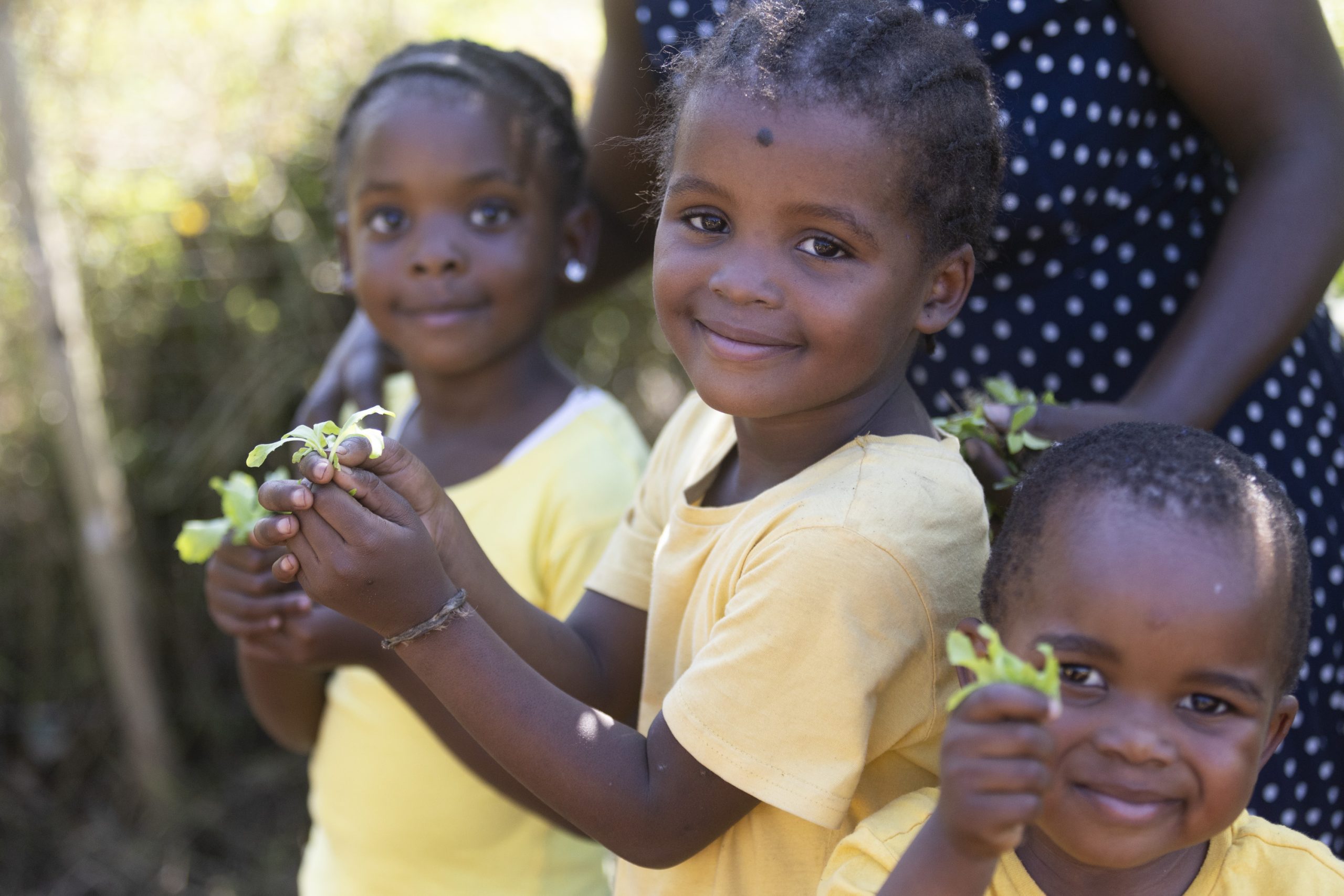
Caption: Children at Favour Mzansi Crèche in uMlalazi Local Municipality pictured with the seedlings they planted in their food garden